




In the Press: Obama sprinkles stardust on Seville tourism conference (and Spain Savvy)
The following is a guest post written exclusively for Spain Savvy by travel journalist Fiona Flores Watson
Tourism’s most important annual event, the WTTC Global Summit (GS), took place here in Seville last week, April 2-4.
The conference is known as the “Davos of Tourism”, such is the high caliber of the attendees, and its international agenda. It was attended by global leaders including two former presidents, Barack Obama and Felipe Calderon (of Mexico), as well as over 1000 top industry professionals.
Spain Savvy was naturally among the delegates at this key event, to find out about new developments and innovations related to our work, and to network with international contacts, all to ensure that we can continue offering the best service to you, our clients.

POSSIBLE DIRECT AIR ROUTES FROM US TO SEVILLE
One of the most exciting developments to emerge from the GS was two possible new airline routes from the US to our southern Spanish city. While such routes have been mentioned previously, with no concrete results, it’s now a step closer to reality that Seville may get a direct link to New York and/or Miami. We can’t confirm this yet, but rest assured that as soon as either (or both) route is confirmed, we will be the first to let you know.
BARACK OBAMA IN SEVILLE
The headline speaker at the conference was Barack Obama. The 44th US President had been scheduled to visit Seville back in July 2016, but his trip to Spain was cut short by the Dallas shootings. So to have him speaking at the conference was a source of great local pride here in Seville, where he was awaited with great anticipation.
Mr. Obama visited the Reales Alcazares, the Royal Palace where Christopher Columbus signed his contract with Queen Isabella of Spain before setting off on his voyage to the New World in 1492. More recently, the palace was used to shoot scenes from TV series Game of Thrones. The “Water Gardens of Dorne” boasted resplendent gold ceilings, tiled walls, and pavilions.
Before his speech at the GS, Spain Savvy founder and managing director Sarah Gemba met the former POTUS. AS Seville’s premier American tourist agency, she offered her services to Mr. Obama on his next trip to Spain.
FAMILY GUY
Starting off his conversation with Hilton CEO Chris Nassetta, Mr. Obama had some high praise for Seville, describing it as “spectacular and beautiful”.
Mr. Obama talked about the rewards of travel, especially with family: “There’s something spectacular about seeing a new place, experiencing a different culture, being exposed to new ideas. Travel makes you grow. As a parent, when you’re able to watch that sense of discovery in your children’s eyes, that’s more special than anything else.” We couldn’t agree more.
On visiting cultural sites, the former president said: “Part of diplomacy is letting other people know that you recognize them. That you appreciate their culture and stories and history and memories. When people feel as if they’re known and understood and seen, then they’re more open to your perspectives as well. It’s true in individuals and in nations.”
Diversity has always been a subject close to President Obama’s heart. “One of the benefits of the travel industry is to remind people both of the incredible value of the diversity of this planet, and the differences we have… Travel also reminds us of what we share and what we have in common.”

FIT FOR A KING
Mr. Obama stayed at the Alfonso XIII hotel, a magnificent and iconic building constructed for the 1929 World Fair by the then King of Spain, as an appropriately regal residence for his family.

The hotel’s gourmet alfresco restaurant is named after the King’s English wife, Ena, granddaughter of Queen Victoria.
Several sumptuous suites in the hotel include the Royal Alfonso XIII suite and the Reales Alcazares Suite. The hotel’s facilities include an outdoor (seasonal) swimming pool, an elegant cocktail bar, and a gourmet food shop offering cooking classes, food tours and wine tastings.


PRESIDENTIAL PICKINGS
Mr. Obama’s restaurant of choice to dine after his appearance at the conference was Bache San Pedro, located on Plaza Cristo de Burgos in the Alfalfa neighborhood. Owner Ale Alcántara, a native of the coastal city of Cadiz, has trained with Michelin-starred chefs Martin Bersategui and Jordi Arola.
Emphasis is on fresh seasonal local ingredients, especially seafood from the Cadiz coast and cheese from the sierra: dishes include pork crackling with Payoyo cheese and achiote sauce, and sea anenome saam with wakame, spring onion and olives.

SEVILLE ON SCREEN
At the same time as the conference in Seville, a parallel event took place honoring a close friend of the former POTUS, also attended by Spain Savvy founder Sarah Gemba.
James Costos, former US Ambassador to Spain, who had been a senior film executive previous to his diplomatic post, was named Honorary Ambassador by the Spain Film Commission. Costos helped to bring a number of large-scale productions to Spain during his 2013-2017 tenure, including the massively successful Game of Thrones TV series. As well as both being keen hispanophiles, Spain Savvy’s founder and Mr. Costos both hail from Massachusetts.

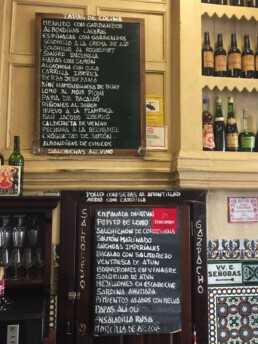
Destination Spotlight: Top Ten Tapas in Seville
Top Ten Tapas in Seville

You haven’t experienced Spain until you’ve tried tapas. These ingenious, tasty little morsels, enjoyed with a group of friends in a lively bar, allow you to sample life in this colourful country - you can tell a lot about people by the food they eat, and how and where they eat it.

The idea is that each person orders one or two dishes, and you all share. You'll usually find a wide range of options, from meat and fish to vegetarian - and increasingly, vegan - whether centuries-old recipes, or avant-garde creations. Indeed, it can hard to choose, but the beauty is that you can try a bit of everyone's. If you don’t like a tapa you ordered, no problem – someone else will eat it, and you can sample theirs. But if, on the other hand, you love one of the little dishes, you can repetir – order it again!
Tapas bars have a buzzy vibe – no reverential hush-hush; the volume in Spain is set to high, with diners discussing the relative merits of their dishes in animated terms. In décor they vary hugely between spit-and-sawdust places, where the décor is traditional and atmospheric (wooden barrel tables and Holy Week posters), and the tapas are classic – pork loin and tortilla; and gastrobars, with slick contemporary décor offering unusual combinations such as tuna with wasabi guacamole and beetroot, or bull’s tail ravioli with parmesan foam.
Always ask about the daily specials, which may be listed on a blackboard, or reeled off verbally (listen carefully, and ask your server to speak more slowly if necessary ("podrias hablar mas despacio por favor?").
Size (of tapa) matters
In many bars, you can choose between ordering a tapa, media ración (half portion, for two people) or ración (portion, for three to four), although portion sizes vary considerably: a tapa can be anything from a dainty bite to a generous, full plate. Always watch what those at the other tables are eating, so if it looks good, you can ask the waiter - I'll have what she's having (roughly translated, "quiero eso").
You’ll be happy to hear that in the eastern Andalucia provinces of Granada, Jaen and Almería, you get a free tapa with each drink.
Here is a list of our top 10 favourite tapas. You can pair them with either a beer, or glass of wine, or Sherry - many tapas bars have a decent selection of local wines and craft beers.
LF: lactose-free; GF: gluten-free; V: vegetarian; (V) can be adapted for vegetarians, or versions available; VG: vegan. (Please also check with the bar or restaurant – they’re obliged by law to have a menu which details allergens in each dish.)

Gambas al ajillo LF GF
A spicy dish, this features juicy shrimp cooked in hot olive oil flavoured with garlic, chilli and salt. It’s served sizzling hot to your table in earthenware or metal dish, so take care not to burn your mouth! It’s easy to make at home, with just five ingredients. The most essential part? Crusty bread to soak up that gorgeous oil!
Espinacas con garbanzos LF V VG
Perfect for vegetarians, vegans, lactose and gluten intolerant, this tapa dates back to Seville’s Sephardic Jewish population, who lived in barrio Santa Cruz. It’s a healthy concoction of spinach, chickpeas, olive oil and, cumin – full of fibre, iron and protein. You can find this in most traditional tapas bars; it’s often served with fried bread.

Gazpacho LF V VG
Originally made from bread and water, over time this incorporated tomatoes, peppers and cucumber, to make the ultimate refreshing and healthy summer smoothie. All Spanish women keep a container of chilled home-made gazpacho in the fridge during the sweltering summer months - it’s served in tall glasses, like a drink. Another version, ajoblanco, features almonds, more avant garde restaurants might feature a strawberry or beetroot version on their menu.
Montadito de pringá
This little sandwich is most carnivores’ idea of heaven. A succulent mix of pork, chorizo or salchichón (pork sausage) and pork fat slow-cooked for hours, it’s tender and juicy and usually prompts noises of pleasure not usually associated with eating. In Seville, classic Bodeguita Romero is the place to try pringá.
Croquetas (V)
Potato croquettes come in every conceivable flavour – black squid ink, pork stew, cheese, mushroom, spinach. Being small, tasty and unscary-looking, these are an excellent option for kids. Most places will serve you a side plate of chips.
Patatas aliolí/bravas V
Another life-saver if you’re travelling with picky-eating kids (and we speak from experience), these little fried cubes of potato will always go down well. They’re usually served with either alioli (garlic mayonnaise) or bravas (spicy) sauce, so be sure to ask for the sauces on the side, to keep all ages and tastes happy.

Jamón iberico LF GF
Worshipped throughout Spain (unless you’re a veggie) for its tender, melt-in-the-mouth nuttiness, the Iberian pig (pata negra, or black hoof) has foraged for acorns (bellotas), putting away 6 or 7kg a day, which give it the yellowy skeins of fat containing superfood monounsaturated oleic acid.
Cazón en adobo
Dogfish or shark marinated in vinegar has a sharp bite to it, but its crunchy coating and the soft texture of the fish balances out the acidity. Pair with beer.
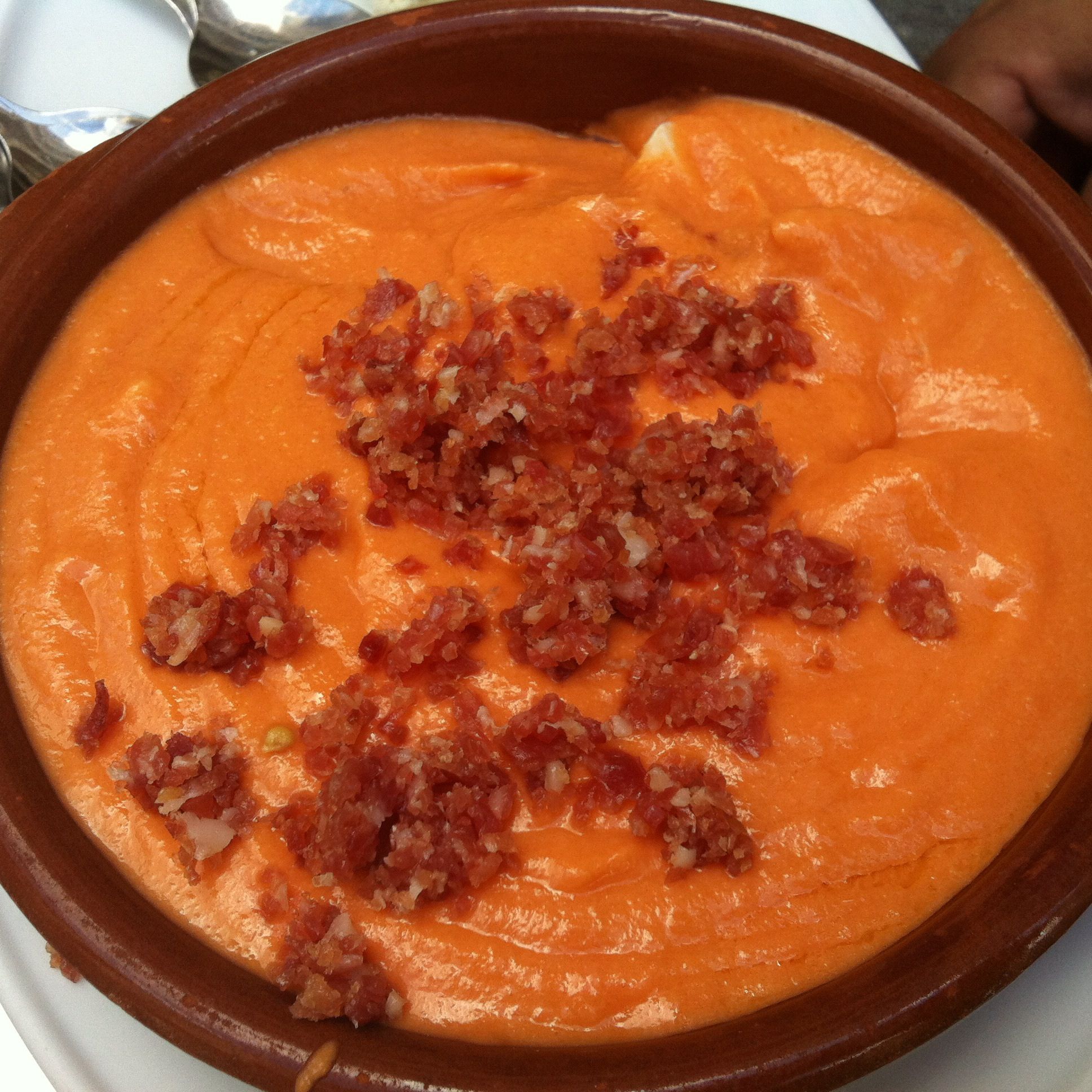
Salmorejo LF (V)
A thicker, smoother version of gazpacho, originally from Cordoba, made with only tomatoes, bread, olive oil and vinegar, garnished with boiled egg and chopped jamon. These days, you can find Insta-perfect versions made with sweetcorn, squid and avocado– try the Salmoreteca stall at the Lonja de Barranco market in Seville, and the Mercado Victoria in Cordoba.

Tortilla de patatas V
The ultimate classic Spanish tapa – a potato omelette: filling, nutritious and tasty; perfect late-night after-drinks snack. Should be soft and creamy in the middle. The classic version is plain (with or without onion), but you can also find it with spinach, chorizo and other additions.
A list like this is highly subjective - everyone has their preferred tapas. Do you agree with our choices? Tell us which tapas you can't resist in the comments below.
Good to know
When you book your trip to Spain with us, you’ll receive our complimentary Spain Savvy destination guides, which include our recommended places to eat.
If you want to find out more about tapas, we can recommend our partners Devour Tours, who offer tapas tours in many Spanish cities.
A great option if you want to learn Spanish while having tapas is our partner LaCasa Sevilla - Cristina offers Tapas Spanish classes in a bar or market in Seville.
For recipes, check out Spanish Sabores by Spain-based American gastro-entrepreneur Lauren Aloise.

Destination Spotlight: Colorful Cadiz

With the impressive title of oldest city in Western Europe, Cadiz is a little-known yet beguiling historic treasure in the south-west of Andalucia, whose charming atmosphere and marine gastronomy will delight visitors.
With a different feel from grander Moorish cities in he region – it’s smaller, quieter, and has better succeeded in preserving its integrity and authenticity - this is a down-to-earth place with a welcome dearth of restaurant chains, and a thriving resident community. Famous for its beaches, seafood and annual carnival, the ancient port is well worth a visit when you’re in Andalucia.
This year Cadiz is in the international spotlight, thanks to its inclusion in the New York Times’ list of 52 Places to Go in 2019.

The bijou seaside city’s distinct identity, uncommercialized and without being over-developed, is partly thanks to not having an airport, which puts off some visitors; but this makes it all the more rewarding for those who venture to explore its centuries-old streets and plazas. Also its unusual geographical situation – the old city is a peninsula, surrounded by the sea on three sides – has led to its fiercely independent character.
As a trading city, founded by the Phoenicians in 1100BC, Cadiz was a meeting point for many different civilizations, from the Romans and Greeks to the Moors (Muslims from North Africa). In Roman times its name was Gades – today, natives of Cadiz are known as gaditanos.
Columbus departed from Cadiz on his second and fourth voyages, and Sherry wine was shipped from here to England from the 16th century, when the city was regularly attacked by English pirates. In the 19th century it was Spain’s main port for trade with America – the monopoly was transferred from Seville. Its economic importance saw a rise in social status, with many magnificent mansions dating from this time. Spain’s first constitution, La Pepa, was drawn up here in 1812.
So what are the must-see points in Cadiz? Here are our suggestions:

The Cathedral: with its striking octagonal towers and golden-yellow dome, this is one of the city’s iconic buildings. It is the resting place of Spanish composer Manual de Falla, who was a friend of Gabriel Garcia Lorca; Cadiz's main theatre is named after him. De Falla is buried in the beautiful crypt – don’t forget to head downstairs to this circular underground chamber, with its fascinating acoustics. Plaza de la Catedral. More information here.


Mercado Central de Abastos: this fresh produce market with over 150 stalls has an extraordinary array of seafood, from tiny shrimps and sea anenomes, to clams and oysters. You can buy a little paper cone of your favourite mariscos and then eat them straight away – the freshest, healthiest, most delicious take-away meal! Also tapas bars serving sushi (obviously), vegan, and Moroccan dishes. Plaza de la Libertad. More information here.
Torre Tavira: the tallest of Cadiz’s viewing towers, perfect for getting your bearings, and enjoying fabulous bird’s eye views. Calle Marques del Real Tesoro 10. More information here
Roman Theatre: dating from the 1st century BC, built by a friend of Julius Caesar, this is the oldest Roman theatre in the Iberian peninsula. It is currently being renovated but some parts are accessible from the interpretation centre. Calle Meson 12. More information here

Playa de La Caleta: on the western side of the old city, this beach is popular with sunseekers of all ages. If it looks familiar, that’s because Halle Berry strode out of the sea here in Die Another Day, the 2002 James Bond film partly set in Havana. Castillo San Sebastian, the southernmost of the two fortresses, connected to the city by a tidal causeway, also makes an appearance in the movie, as a medical clinic on an island.
Other good places to sample the local seafood are El Faro (Calle San Felix 15; try the tortillitas de camarones, shrimp fritters), while Ultramar&nos (Calle Enrique de las Marinas 2) has a more contemporary take on gaditano cuisine with its renowned stews and inventive spins on traditional favourites – tuna tacos or grilled squid with seaweed salad - as well as plenty of meat and vegetarian options. Don’t forget to try a glass of Sherry, the dry fortified wine which is made nearby – start with fino or manzanilla, both dry and perfectly matched with fish and seafood.

This is a guest post written exclusively for Spain Savvy by Fiona Flores Watson.
Carnaval is Cadiz’s biggest, most important annual event –Spain’s most colourful and outrageous carnival, held in mid to late February (2019 dates are 28 February to 10 March). During the two weekends, the streets are filled with people – Spanish and from elsewhere - dressed up as priests and nuns, astronauts, cavemen, chickens and more. Singing groups called chirigotas, also in fancy dress, perform bitingly satirical songs about topical issues, often featuring politicians of the day. It's a great fun day out for all the family, a real visual feast; be aware that night time at weekends gets quite rowdy! Barrio de la Viña, between Mercado de Abastos and Playa de la Caleta. More information here.
Interesting fact: American Civil War Unionist General George Meade was born in Cadiz. His Irish father was a naval agent in Spain for the US government. Meade commanded the Army of the Potomac, defeating General Robert E Lee at the Battle of Gettysburg.

Culture Corner: 400 years of Murillo in Seville
Murillo IV Centenary in Seville
After a full year of events commemorating the 400th anniversary of the baroque painter Murillo, celebrations finish on a high note. The final show of Año Murillo is a major exhibition at Seville’s Museo Bellas Artes (Fine Arts Museum): Murillo IV Centenario.
Bartolomé Esteban Murillo (1618-1682) was one of the most celebrated and influential painters in Spanish history. Although he enjoys less renown outside Spain than his compatriots Velazquez and Goya, both more familiar to global audiences, in traditional, fervently religious Seville, he is highly lauded. The fourth centenary celebrations have also seen another major exhibition examining the artist’s influence – Murillo: The Self-Portraits, at the Frick in New York and then London’s National Gallery.

This Murillo show here in Seville is the most important of the Golden Age artist for years - major exhibitions of his work have been held in Madrid’s Prado Museum and the Royal Academy in London, the latter in 1983, so it was time to introduce the master to a new generation of art-lovers.
Murillo was most well-known for his religious portraits commissioned for churches and monasteries in Seville of the Virgin Mary with baby Jesus, floating on clouds held up by plump cherubs. This exhibition has 55 of his works, divided into nine themed areas, from religious (Holy Childhood, Family of Nazareth and the Immaculate Conception), to Storyteller, Genre paintings and Portraits.
Instead of an audio guide or leaflet, you get an excellent little booklet (available in Spanish or - good - English), a handy size for pockets, with one page for each painting: a small black and white reproduction with the work’s title, date, permanent gallery or collection, and a description.

The first rooms contain his best-known topics, including The Good Shepherd (the Christ child with a sheep, which represents Agnus Dei, Lamb of God), along with several representations of the Virgin and Child, and Jesus and his father Joseph. You can see small sketches of some paintings, often held in different galleries to the full-size versions, so this is a unique opportunity to view the two versions alongside each other.

While some works feature the Virgin atop celestial clouds and angels, combining earthly beauty with spirituality, other paintings have a more down-to-earth, intimate and domestic setting, with Joseph doing his woodwork and Mary sewing, an atmosphere of contentment and closeness. Look out for The Nativity, an exquisite work painted on obsidian (black volcanic glass), at the end of room 3. The light around the figures, against the dark background, lends the appearance of glowing halos.
The Immaculate Conception, which shows Mary draped in a richly-coloured gown, held aloft by chubby cherubs, is painted on copper using glazes, giving the colours an ethereal effect. She is a radiant beauty in a celestial setting.

From the not overtly religious subjects, we see allegorical works representing indulgence and excess of The Prodigal Son Feasting (both sketch and final version), with extravagant food and clothes, and exotic details hinting at the well-travelled patron’s mercantile activities.
Several paintings are notable for their extraordinary attention to detail in each and every figure: The Marriage Feast at Cana has rich colours in its cast of characters, all with intriguing expressions, while The Adoration of the Magi has delightfully naturalistic figures showing emotional reactions as they meet baby Jesus. These are the three figures seen at traditional Three Kings processions on 5 January all over Spain.

The subjects in Room 8’s paintings broke the mould of the 17th-Spanish art world at the time, depicting street children realistically, with humour and tenderness – Four Figures on a Step, whose distinctive bespectacled woman features on the publicity for the exhibition, and The Little Fruit Seller, as much social commentary about the fate of Seville’s poor as aesthetic study. Such street scenes, with their beautifully rendered details, were popular with northern European patrons, who wanted to take home a memento from the city.
For some works, loaned from galleries across Europe and the US, including the Prado, the Louvre, and the Met – see the list below - this is the first time they’ve come back home to Seville since they were painted here in the 17th century.
At weekends, the museum offers free activities for families themed around the exhibition, using two sets of cards: one showing details from paintings with clues, and one of (largely religious) clients and collectors - a concept perhaps better suited to older children.
Paintings come from the finest galleries around the world, including Metropolitan Museum of Art, New York; Frick Collection, New York; Museum of Fine Arts, Houston; Toledo Museum of Art, Ohio; Kimbell Art Museum, Fort Worth, Texas; Prado, Madrid; Louvre, Paris; Gallerie Nazionali di Arte Antica, National Gallery, London
Murillo IV Centenario is on Museo Bellas Artes in Seville until 17 March 2019
For more details see Año Murillo and the Bellas Artes Museum.
This is a guest post written exclusively for Spain Savvy by Fiona Flores Watson.
Contact us today for your own Spain Savvy custom itinerary!

In the Press: Spain Savvy on Enjoy Living Abroad
Spain Savvy on Enjoy Living Abroad Blog
We were thrilled to be featured on Karen McCann's "Enjoy Living Abroad" blog where we discussed what it's like to visit Seville in winter. Karen also interviewed our founder Sarah Gemba on what brought her to live abroad and how she enjoys life here!
Karen asks Sarah about how she came about to start Spain Savvy and here's what she had to say about her customer base and how she prepares her clients for their first visit to Spain:
I focus on the U.S. market, and my clients are anywhere from 2 to 80 years old (some of my favorite clients are families with small children!). My clients are interested in luxury or adventure travel. They are curious travelers who like to eat well and discover the hidden corners of their destinations. They speak a little Spanish but are yearning to learn more. They want to meet locals and learn what it would be like to live (or retire!) here.
(I recommend they...) erase any pre-conceived notions you might have about Spain and prepare to be dazzled. This country will truly surprise you in so many ways. Do a bit of research and reading, and brush up on your high school Spanish so you can connect with the locals. If you are friendly, they will respond with a tremendous amount of warmth and welcome!
There is absolutely no better way to get to know a culture than through its food. For instance, many classic Spanish dishes came to be during the Spanish Civil War (1936-1939) when richer foods were hard to come by. One of our favorite holiday traditions is making migas on Christmas Eve at mid-day. Migas are made in a huge cazuela (ceramic deep dish) and the star ingredient is day-old bread crumbs (in some provinces, it is simply flour or semolina). There are hundreds of versions of this dish all over Spain, and it can be a fascinating way to learn about the history of a place by finding out why they use certain ingredients.
Check out the full interview at this link: Sarah & Seville: A Love Story
A warm gracias to Karen for being a big supporter of Spain Savvy since its inception!
On another note, if you are following this blog, please stay tuned for more regular posts in 2019. 2018 has been a busy year for us as our business grew, but we have made an important New Year's resolution to focus a bit more on our blog content in 2019.
Contact us here if you would like to plan your own custom itinerary, or if you have any requests for future blog content!
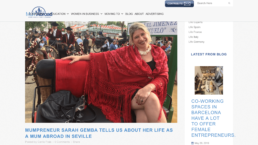
In the Press: Spain Savvy featured on expat mothers' blog
Our founder, Sarah Gemba, was thrilled to be featured recently on the MumAbroad Life website in the interview section as well as their business directory of expat mothers running businesses in Spain.
You can check out the interview here and our business listing here.
Sarah offers her thoughts and some great tips on living in Seville as an expat mother:
"I have always felt very welcomed as a foreigner living in Seville. People are always fascinated about what brought me here and want to know more about my home culture.
There are lots of families and children in Seville and opportunities for activities with children are growing all the time. There is a great newsletter I suggest families subscribe to that offers a weekly update on child-friendly activities in Seville, called Sevilla con los Peques.
Other recommendations to mums in the area would be to join the American Women’s Club (AWC) chapter in Seville that organizes lots of activities for every walk of life, and especially for families. There is also a wonderful Facebook page called Mums in Seville that is a wealth of information for recently-arrived expat families.
Relocating to a new country and adapting to a new culture takes patience and understanding – the locals won’t always do things the way you are used to them being done back home and that’s OK. Just remember you live in a beautiful city with so much to offer. Seville, and Spain as a whole, is very welcoming to children and families, and I think it’s a great place to live!"
Spain Savvy is grateful to the MumAbroad Life network for being so supportive of expat mothers.
Contact us if you're looking to travel to Spain with your family!

Destination Spotlight: Mojácar, Almería
The Spain Savvy family is back from our summer vacation in Mojácar, Almería and while it's still fresh, we want to share what we discovered in this beautiful corner of southeast Spain during our six-day jaunt as a family (2 adults and 3 children - ages 7, 5 and 2). The Spain Savvy children are good little explorers and we were pleased to find this area to be especially family-friendly!
Here's a beautiful little visual map (courtesy of this website) that will situate you geographically. Valencia and Barcelona are further north on the Mediterranean coast and we drove about 5 hours east from Seville to get there.

We rented this licensed touristic apartment in the Mojácar area managed by a nice Italian woman who we never got to meet but who was very responsive to a couple minor housekeeping problems we had on arrival, which she resolved immediately. The apartment was fine - it had everything we would need, was clean and modern, and had plenty of space for the kids to feel like they were at home. The best part was the terrace with its gorgeous views of the Macenas beach, including the historical 18th century Macenas Castle (pictured below) and Perulico Tower (built during the Nasrid period in the Muslim occupation). We were blessed with a full moon on our last night that was just spectacular!

We were located about a 20 minute drive from the village of Mojácar but just 5 minutes from the beaches and the apartment was in a private resort area called Playa Macenas Beach & Golf Resort (unfortunately it seemed a bit abandoned - no golf club and nothing in terms of entertainment at the resort - just private pools and a 24 hour security guard - but on the upside, very quiet and peaceful!) We were lucky that our apartment was just steps from one of the pools and the kids just loved splashing around every day after our daily beach trips.

On the day we arrived, it had been a long morning driving (one of those road trips where it seems like every 30 minutes, someone has to use the bathroom...!) , so we went right to lunch at Neptuno Restaurant on the beach for our first taste of the delicious local seafood before heading to check in at the apartment. The kids enjoyed the pool while we unpacked, got settled, and relaxed on the terrace with a light supermarket dinner.
The next day, we wanted to experience the beach we had right in front of the apartment and spent a lovely morning there splashing in the warm waters and playing in the sand. Lunch that day was at the closest chiringuito (beach bar) we could find and we liked the beach so much that we went back to our spot and spent the rest of the afternoon there, in and out of the waves.


We wanted to go out to dinner that night and stumbled upon a really great place called Marama Luz de Luna. The food and service were excellent and the kids had a blast playing near our table and even made some friends!

The beach nearest to our apartment had quite a bit of stones so we decided to look for a sandier beach the next day. We ended up in front of Tito's Beach Bar and it was a hit! The kids were in the ocean all morning. Today was special because we went for lunch at Casa Egea (which coincidentally is our family name), and everyone agreed it was our favorite restaurant of the whole trip!


That afternoon we went back to the apartment early to go to the picturesque village of Mojácar for ice-cream-for-dinner (the best kind of dinner!). We had tried to go to check out the village (with fame as one of the most charming in southern Spain) the night before but ended up doing a panoramic tour from our car, as there was absolutely nowhere to park. Tonight was not much easier but we did manage to get a spot to get out and walk around a bit. It's possible that it was a result of the time of year we came, but we found the village to be absolutely crawling with people - way too many people for our liking. There were also souvenir shops on every corner. We saw potential for charm - there were some lovely corners and the views over the Sierra de Cabrera were just gorgeous. Next time we will try to come during low season to explore more, and maybe have an actual meal (perhaps at La Candela which we had earmarked as a possible spot to try).


The following day we wanted to make a short excursion to another nearby beach. We had heard lovely things about Agua Amarga and it was close by (30 min) and had a kid-friendly beach so we decided to try it out. On our drive there, we unexpectedly hit the dense traffic for Playa de los Muertos, which we had also heard was amazing (consistently named one of Spain's best beaches) but unfortunately not kid-friendly (long walk from parking areas and no services once you get on the beach). After seeing all the traffic, we're glad we didn't go!
We absolutely loved Agua Amarga. The beach was a little rocky but we loved the vibe - extremely family-friendly, chill, and not crowded at all. The village seemed really lovely and all the people we met were friendly and welcoming. We also hit the mark with a great lunch right on the beach at Los Tarahis.


After lunch we got back on the road back to the Mojácar area and the kids wanted more beach (!) so we went back to our spot at Tito's for another swim and then had an early night at home with dinner on the terrace.
Next up was Playa de Lance Nuevo, just a bit further down from Tito's which we had seen was also a sandy beach and had pedal boats with water slides for hire! We ventured out for a half hour ride (10€) and had a blast pedaling around the beach and jumping in and out of the crystalline water - it was quite an adventure for the whole family!

For lunch at Playa del Lance Nuevo, we hit up Ankara Beach Terrace on recommendation from our Airbnb host and had the best chocos fritos (calamari) we've ever had, anywhere in the world. Considering this is high on the list of favorite foods for the Spain Savvy kiddos, it was obviously a home run.

We headed back to the beach after lunch but it got a little windy so we packed up and headed back to the apartment for some extended pool time.
Since the next day would be our last opportunity for a beach day, we decided to go with what we knew and loved - back to Tito's! We also hit up Tito's Beach Bar for lunch and it was amazing - a tropical vibe, deliciously creative dishes and the kids ate up their yummy cheeseburgers right up. Here's a great review we found online that convinced us to try this place out.


For our last day of vacation, we had a surprise in store that would also break up the drive home. We stopped about an hour from Mojácar in the desert of Tabernas at Oasys Mini-Hollywood. Tabernas is the site of the only desert in Europe, where all the "Spaghetti Western" films were shot in the 1960s and 1970s. There are actually three parks in this area - Fort Bravo, Western Leone and Oasys, but we chose Oasys for its added water and zoo offerings (which ended up being a fabulous idea - the water slides were SO fun for the kiddos!) They also offered a buffet lunch along with the entrance ticket which was perfect for us. The park is managed by the Playa Senator hotel chain and the food was pretty decent - who doesn't love a buffet? We wandered around the Old West-themed recreated village, hiked through the zoo/nature reserve, and then spent a good hour in the water park before lunch and heading back out on the highway. All in all, a fabulously fun day for all!
We were so grateful to have the opportunity to discover this area of Almería on our family vacation and look forward to helping YOU plan your trip there with our tried-and-true recommendations!
Contact us for your own customized itinerary including this destination!

In the Press: Spain Savvy in the New York Times
New York Times: "In Spain, Searching for Ancestors, Dry Wine and Calm Seas"
We were thrilled that our founder, Sarah Gemba, was named in Luisita Torregrosa's article in the New York Times Travel section this past weekend as an expat who has found her way to life in Spain.
Some snippets:
"Spain has been a haven for writers and dreamers and wanderers, expats from colder lands. Unlike Mexico, where expatriate Americans tend to concentrate in San Miguel Allende, Mexico City and the Riviera Maya, Americans in Spain are scattered through the peninsula. Sarah Gemba, a Bostonian who fell in love with a Spaniard, moved to Seville years ago and started a travel agency. A fellow New Englander, Lauren Aloise, transplanted herself to Madrid and established food tours. My mother had wanted to move to Madrid and lived with that dream for years but never managed to do it. As a child, I didn’t understand her passion for Spain, why she felt so at home there. But now I know."
One evening after dinner at Duo Tapas, an outdoor spot on a busy plaza, a couple of acquaintances and I walked leisurely around the Barrio Santa Cruz, the gem of Seville’s intricate casco antiguo, a nest of elegant two-story homes of pale colors and decorative grillwork butting cobblestone streets. It was near midnight, not late by Spanish standards. Strollers lolled under the soft lights of street lamps, bars spilled over with patrons. Minutes later we were climbing the three flights of stairs to the rooftop bar of the EME hotel. It was packed. Taped music blared from speakers. I found myself bouncing to an old hit whose name escaped me. More friends of friends joined in. There were drinks, introductions, stories.
You can read the entire, enthralling article about the author's travels through Spain this past summer, at this link.
Contact us today for your very own customized Spain Savvy itinerary.

Spain Savvy Partners: LaCasa Sevilla
Spain Savvy Partners: LaCasa Sevilla
Since our inception, we have had many travelers requesting to incorporate a language acquisition element in their trip in the form of Spanish classes. The options in Sevilla for language learning are many, and there are very high-quality options to choose from, both traditional and non-traditional. We wanted to meet this particular need for our clients in a way that perfectly compliments Spain Savvy custom travel design. We are pleased to announce our first official partnership with LaCasa Sevilla, offering Spanish language learning outside of the traditional classroom space with private, expert and native Spanish teachers. With the flexibility of LaCasa, you can learn Spanish in real-time communicative situations – while ordering a coffee at a local café, over tapas at an authentic bar or market, or while shopping in the city. LaCasa Sevilla offers Spain Savvy clients the unique opportunity to learn both the Spanish language and culture in a totally immersive environment. There is even the possibility of learning Spanish with an instructor who also specializes in flamenco dance and music, in the beautiful and peaceful natural environment of Sevilla's María Luisa Park.
Should you choose to include a language element during your trip, Spain Savvy and LaCasa will collaborate to custom-design an educational program just for you! With La Casa and Spain Savvy planning your trip, Sevilla will become more than just your vacation destination, it will also become your classroom.
"LaCasa is a concept that emerged from the idea of offering students studying Spanish a different way to learn a language. You learn in a linguistic and cultural immersion environment. Learning and fun go hand in hand. You will have an unforgettable experience designed exclusively for you." - Cristina, LaCasa founder and Spanish teacher
Read more about our partnership at this link.
Please join us in welcoming LaCasa Sevilla to the Spain Savvy family. We are thrilled to have found an organization that is equally passionate about sharing Sevilla, including its language and culture, with visitors.
Contact us today to begin work on your very own Spain Savvy custom itinerary!
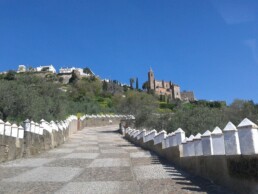
Destination Spotlight: Zufre, the village in the clouds
Spain Savvy Destination Spotlight: Zufre: The Village in the Clouds
Just an hour from Seville, in the Sierra de Aracena and the Picos de Aroche Natural Park, is the stunning white village of Zufre. Perched 450 meters above sea level, it has breath-taking views over the nearby reservoir and lakes. Steeped in history, it’s also a great base for nature walks, bird watching and fishing.
There are historical traces of Muslim influence in Zufre from the 8th century. The name is said to come from the Arabic word Xufre, meaning a tributary river. You can see the village’s Arab history in the twisting, narrow streets, declared to be of Cultural Interest in 2002.
The main sights include the square around the Iglesia Purísima Concepción. This 16th century church has much older origins and stands on the site of a former mosque. In the same square you’ll find the architecturally interesting Town Hall building and an unusual head-shaped fountain, the Fuente de la Consejo.
Stroll through the winding streets towards the bullring and stop for a coffee or lunch at the Paseo de los Alcaldes. A shady square that acts as a stunning viewing area overlooking the lakes, there are a couple of restaurants and a climbing frame and slides to keep little ones entertained. Take at seat outside the Ventana de Zufre restaurant and soak up the amazing views and enormous skies. If you’re visiting in winter, the restaurant has an open fire and picture windows overlooking the reservoir.
Don’t miss the village’s patron saint celebrations if you are visiting in August. Held in honour of the Virgen del Puerto, the villagers carry an image of the Virgin from the Hermitage 12 kilometers away. The festival is famous for the horse races that are run through the village’s steep, winding streets. Easter is another busy time, when the village comes alive with religious processions.
Some fantastic rural accommodations in this village are Casa Vesta and El Postigo de Zufre.
But, even if you don’t visit for one of its fiestas, Zufre is a great year-round destination, why not make it part of your trip to Andalucia? Contact us today to begin work on your very own custom itinerary.
This is a guest post written exclusively for Spain Savvy and featuring photos by Lucy Williams